Absolute emergency: if you suddenly lose vision in one eye, call SAMU (15) or go to the emergency room within 4.5 hours. Every minute counts.
Central retinal artery occlusion (CRAO) is often called the “stroke of the eye.” It is a rare but serious medical emergency, which can lead to irreversible vision loss if not treated immediately.
Understanding the diseaseWhat is the OACR?
The retina is supplied by the central retinal artery. When this artery becomes blocked – most often by a clot (embolism) coming from the heart or carotids – the retina is no longer supplied with oxygen. Within minutes, retinal cells suffer and begin to die. Without prompt treatment, vision loss may be permanent.
CRAO shares the same mechanisms as cerebral stroke: this is why it must be managed as a neurovascular emergency. The risk of having a stroke in the 2 months following an OACR is multiplied by 9.
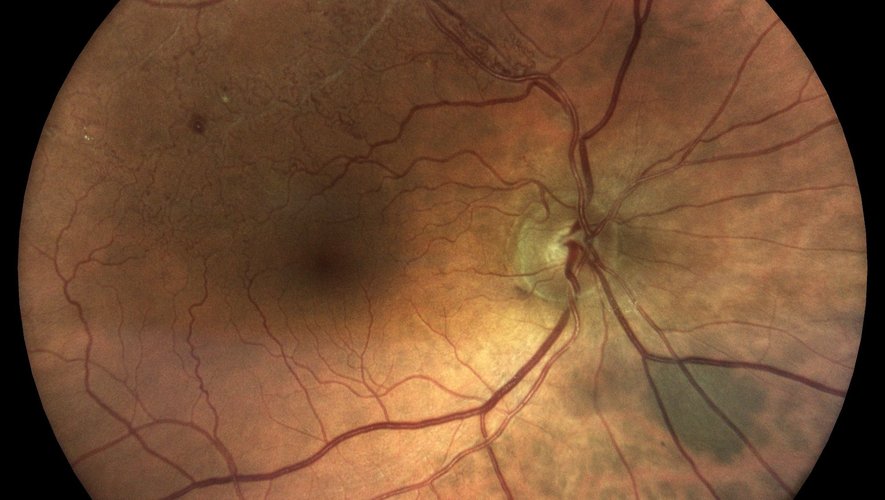
Illustration: occlusion of the central superior retinal artery with non-perfused area
Warning signsHow to recognize an OACR?
- Sudden, painless loss of vision in one eye — the most common sign
- Sudden blurred or veiled vision in an eye, like a curtain coming down
- Black or gray vision in part or all of the visual field
- Rapid disappearance of vision (a few seconds to a few minutes)
Warning: loss of vision is often painless. The absence of pain can lead people to believe wrongly that it is not serious. This is a dangerous mistake.
What to doGood emergency reflexes
- Don’t wait let it happen. Even if the vision returns, consult.
- Call 15 (SAMU) or go to the emergency room immediately.
- Specify the exact time symptoms started — this is crucial for treatment.
- If seen within 4h30, treatment by thrombolysis may be offered.
- A complete neurovascular assessment will be carried out: ECG, cardiac ultrasound, brain MRI.
Risk factorsWho is affected?
- People with high blood pressure
- Atrial fibrillation or cardiovascular diseases
- Diabetes or high cholesterol
- Smoking
- Horton’s disease (giant cell arteritis, to be suspected systematically)
Follow-upAfter an OACR
An OACR sometimes repermeabilizes in 3 to 4 weeks. Regular ophthalmological follow-up is essential to monitor progress and prevent complications such as neovascularization. Your doctor will adapt the treatment according to the cause identified.
Dr Mehdi Batras — Ophthalmologist in Casablanca, specialized in retinal surgery. For any sudden eye symptoms, our office is available urgently. Contact us.