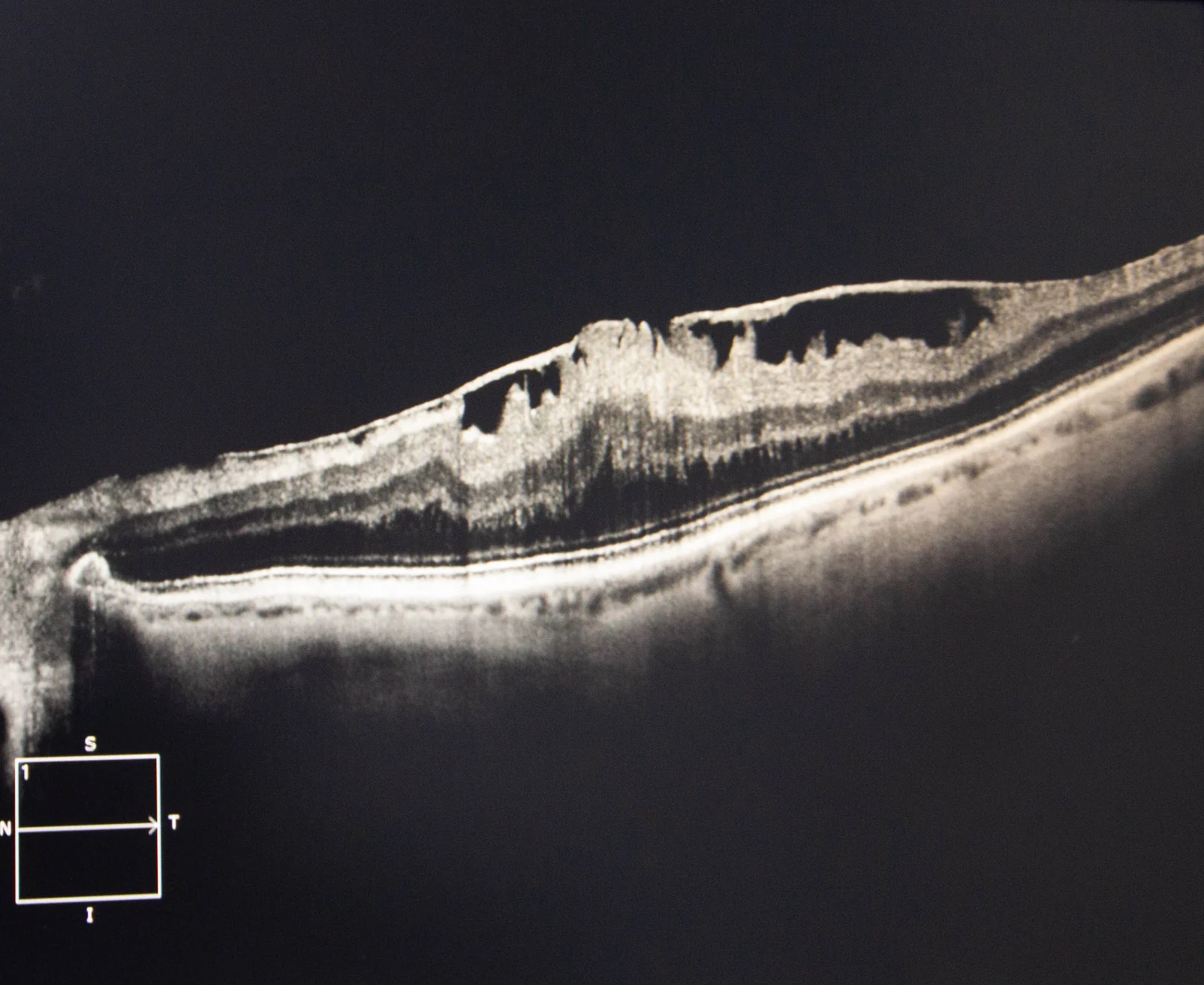
IMPORTANT REMINDER: WHAT IS THE EPIRETINAL MEMBRANE?
The epiretinal membrane is a thin layer of fibrocellular tissue that forms on the surface of the retina, more precisely on the macula, the area responsible for central vision. This condition, usually related to age, can also result from inflammation, previous eye surgery or retinal detachment.
HOW TO KNOW IF YOU ARE SICK: THE SYMPTOMS
Symptoms of an epiretinal membrane often appear gradually and can vary in intensity. Here are the most common signs:
-
Blurred vision: Vision gradually becomes less clear, affecting the ability to read or see details up close.
-
Visual distortion (metamorphopsia): Objects may appear distorted, with straight lines appearing wavy or curved.
-
Decreased central vision: The ability to see clearly in the center of the visual field is reduced, while peripheral vision generally remains intact.
-
Difficulty distinguishing small details: tasks that require precision, such as reading or sewing, become more difficult.
These symptoms may progress slowly.
HOW IT IS CREATED: TREATMENT OF THE EPIRETINAL MEMBRANE
Treatment for epiretinal membrane varies depending on the severity of symptoms.
-
For mild cases, regular observation may be sufficient.
-
For complex cases where vision is significantly impaired, vitrectomy is often necessary. This surgical procedure removes the vitreous membrane and gel, allowing the retina to smooth out. Postoperative follow-up is essential to ensure optimal visual recovery, although vision may still require some time to improve.
PROGRESS OF THE INTERVENTION
THE FOLLOW-UP OF THE INTERVENTION
I HAVE AN EPIRETINAL MEMBRANE,
WHAT SHOULD I DO?
During the operation for an epiretinal membrane, the surgeon performs a vitrectomy under local or general anesthesia. He removes the vitreous gel and epiretinal membrane using small instruments inserted through tiny incisions. The eye is then swabbed and protected, with post-operative follow-up essential to ensure good recovery.
After the procedure, the patient may experience slight discomfort and temporary blurred vision. A bandage is usually applied to protect the eye. Eye drops and possibly medications are prescribed to prevent infection and reduce inflammation. Regular follow-up with the ophthalmologist is crucial to monitor healing and adjust treatment if necessary. Full recovery may take several weeks, with gradual improvement in vision.
If for several days you have difficulty distinguishing small details, objects seem distorted, or your eyesight seems clear, consider consulting. Our office remains at your disposal.
Ophthalmologist in Casablanca specializing in the retina
NEED TO CONSULT?
Need medical advice?
Book an appointment with Dr Mehdi Batras for an eye examination tailored to your situation.
Book an appointment