
IMPORTANT REMINDER: WHAT IS GLAUCOMA?
Glaucoma is a chronic and progressive optic nerve disease causing irreversible damage to the visual field. The main risk factor for glaucoma is ocular hypertonia (or increased intraocular pressure).
There are several types of glaucoma, the most common of which is chronic primary open-angle glaucoma. Other rarer glaucomas are normal pressure glaucoma, angle-closure glaucoma, glaucoma secondary to other eye conditions, etc.
HOW TO KNOW IF YOU ARE SICK: THE SYMPTOMS AND WHO IS CONCERNED?
Symptoms of glaucoma
Glaucoma is often called the “silent thief of sight” because it can progress without obvious symptoms in the early stages. However, certain signs can alert:
Progressive loss of peripheral vision (side vision), often undetectable at first.
-
Blurred vision or halos around lights.
-
Severe eye pain, especially in narrow-angle glaucoma.
-
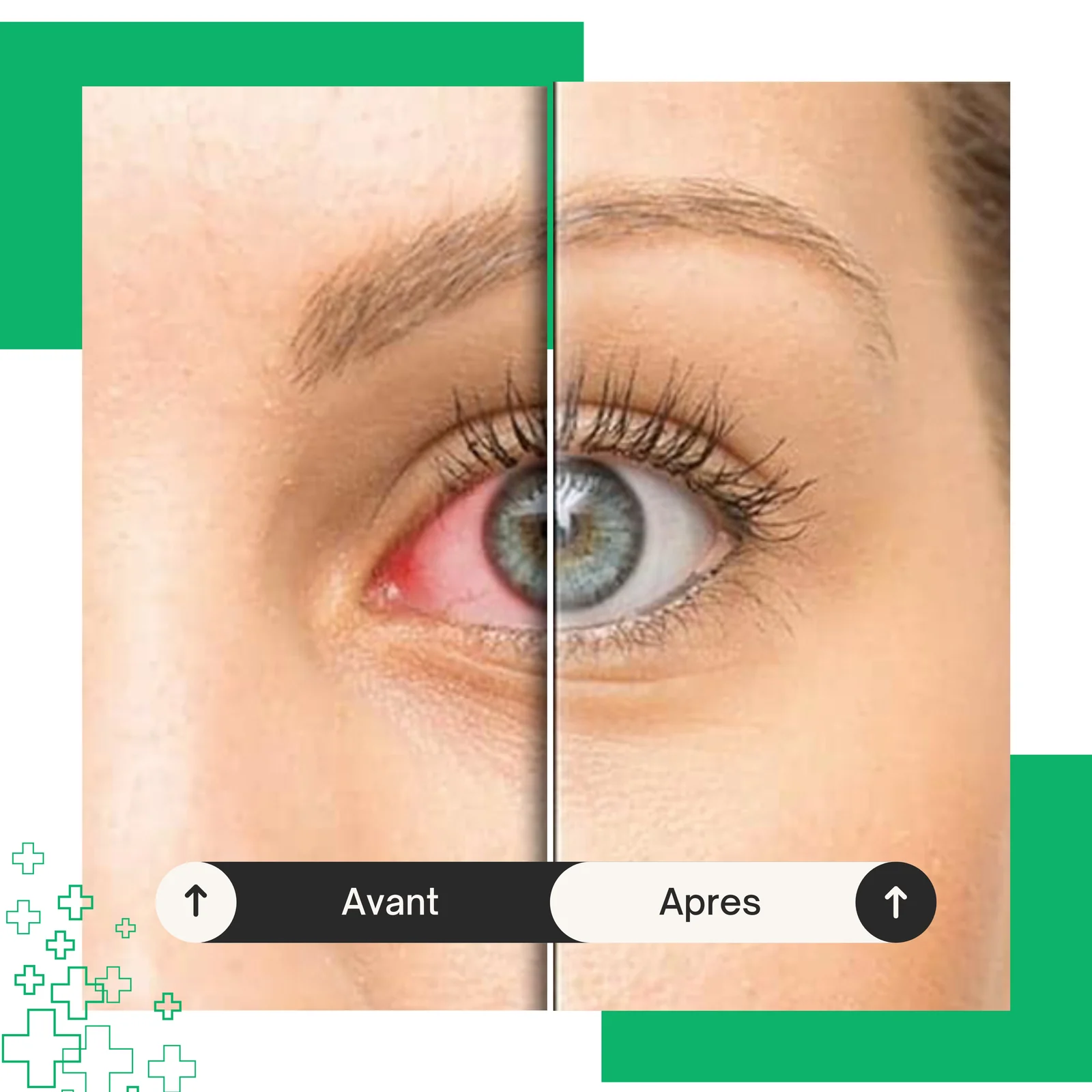
Redness of the eye
-
Nausea and vomiting accompanying an acute attack of glaucoma.
-
Rapid decrease in vision in advanced cases.
Who is affected by glaucoma?
Glaucoma is a pathology that can affect everyone. However, there are certain risk factors predisposing to glaucoma, the main one of which is increased intraocular pressure (hypertonia). Other factors should also be considered, such as family history of glaucoma, age (average risk of glaucoma between 55 and 75 years), high myopia, thin corneas, sleep apnea syndrome, etc. For angle-closure glaucoma, the risk factors are different; the initial mechanism being mainly constitutional with an anatomical factor responsible for a narrow and potentially closable iridocorneal angle
Regular screening is recommended, especially after age 40.
HOW IT IS CREATED: DIAGNOSIS AND TREATMENT OF GLAUCOMA
-
Examinations to detect glaucoma
As glaucoma remains an asymptomatic disease until severe stages, the challenge is to detect it as early as possible. Indeed, the visual prognosis depends on how early treatment is started.
To detect and diagnose glaucoma, a complete examination is necessary with measurement of the intraocular pressure (IOP), measurement of the thickness of the cornea (pachymetry), examination of the iridocorneal angle by gonioscopy (using a glass placed on the eye), examination of the optic nerve through the fundus.
Additional examinations are also essential such as a retinophotography (photo of the optic nerve) and an OCT of the head of the optic nerve (papilla) and the macular ganglion cells and especially a visual field (detecting peripheral visual deficits).
These examinations must be carried out several times during follow-up in order to judge the progression of glaucoma. They will be done at a pace depending on the severity of the glaucoma.
-
Treatments for glaucoma
Glaucoma is a disease that cannot be cured. In the absence of a curative treatment for glaucoma, the therapeutic arsenal includes numerous treatments to slow the progression of the disease to stabilize it. Among these treatments, there are many medications including eye drops (drops to instill daily), laser treatments (see SLT for open-angle glaucoma, YAG for closed-angle glaucoma, etc.) and surgical treatments by filtering surgery (see glaucoma surgery page) for the most advanced cases progressing despite previous treatments.
.
PROGRESS OF THE INTERVENTION
THE FOLLOW-UP OF THE INTERVENTION
I HAVE GLAUCOMA,
WHAT SHOULD I DO?
The vitrectomy procedure involves removing vitreous gel from the eye to reduce traction on the macula. Then, a gas bubble is injected to help close the hole. The patient must maintain a specific head position so that the bubble remains in contact with the retina. The procedure is done under local or general anesthesia.
After an eye ultrasound, the patient may feel some slight discomfort from the conductive gel, but this disappears quickly. There is no recovery period necessary, and the patient can return to normal activities immediately. The results of the examination are analyzed by an ophthalmologist to determine the presence of any abnormalities.
A detailed report is usually provided to guide next steps, if further treatment or tests are needed.
We recommend that you consult our office if you have symptoms such as blurred vision, halos around lights, or eye pain, redness of the eye.
Ophthalmologist in Casablanca specializing in the retina
NEED TO CONSULT?
Need medical advice?
Book an appointment with Dr Mehdi Batras for an eye examination tailored to your situation.
Book an appointment