
IMPORTANT REMINDER: WHAT IS A CATARACT?
Cataract is one of the leading causes of vision loss. It is characterized by a progressive opacification of the crystalline lens, the natural lens of the eye.
This phenomenon can occur naturally with age, leading to a decrease in visual acuity. Although cataracts are often linked to aging, they can also develop for other reasons, such as congenital cataracts (present from birth), diseases such as uveitis or diabetes, the use of certain medications such as corticosteroids, or even eye trauma.
HOW TO KNOW IF YOU ARE SICK: THE SYMPTOMS
It generally develops gradually, with symptoms that appear slowly:
-
Blurred or blurred vision at a distance.
-
Increased sensitivity to light, such as sunlight or car headlights at night.
-
In some cases, it can cause myopia, which can improve near vision.
Thanks to precise examinations, ophthalmologist Dr. Batras can diagnose an incipient cataract in each patient.
HOW IT IS CURED: CATARACT TREATMENT
Cataract surgery is mainly indicated.
The diagnosis of cataract is clinical. During the biomicroscopy examination, Dr. Batras will observe the opacification of the lens. A drop of mydriatic is used to dilate the pupil, making it easier to examine the lens and fundus. Fundus photographs and OCT may be performed to rule out other pathologies that may be responsible for the reduced vision.
PROGRESS OF THE INTERVENTION
THE FOLLOW-UP OF THE INTERVENTION
I HAVE A CATARACT, WHAT SHOULD I DO?
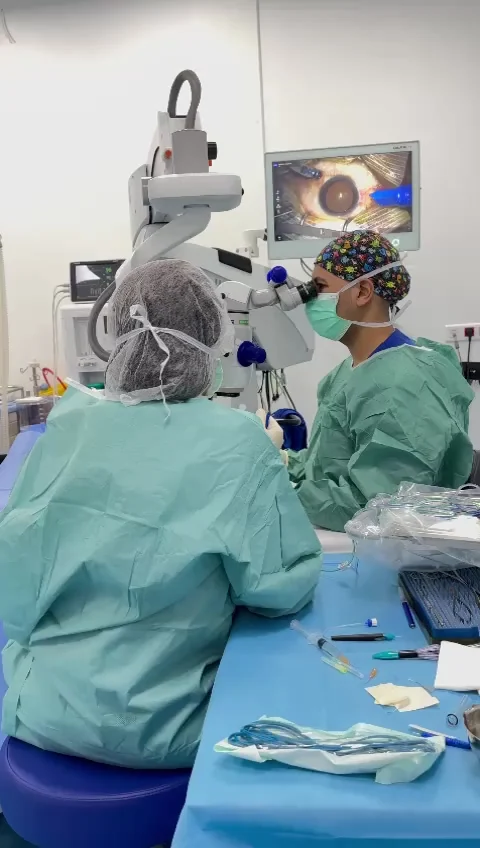
The procedure is performed with the patient lying on their back, in a sterile surgical environment and under a microscope. It is considered an invasive procedure because it requires an incision of the cornea and extraction of the lens. Cataract surgery is done under anesthesia on an outpatient basis.
The procedure involves extracting the lens using a probe inserted through a small incision, using a system of suction and ultrasound.
Postoperative care is relatively simple, limited to instilling drops and wearing eye protection, the details and duration of which will be specified by the doctor. In the majority of cases (95%), the operated eye does not present pain. Vision improves quickly, and correction with glasses may be necessary after a few weeks. It is not recommended to resume professional activities, use dangerous machines or instruments, or drive for a specific period of time that your doctor will determine with you.
If your vision is blurred, you have difficulty reading, driving (especially at night) or distinguishing faces, this may be a sign that the cataract is progressing and surgery becomes necessary. We recommend that you consult. Our office remains at your disposal.
Ophthalmologist in Casablanca specializing in the retina
NEED TO CONSULT?
Need medical advice?
Book an appointment with Dr Mehdi Batras for an eye examination tailored to your situation.
Book an appointment